
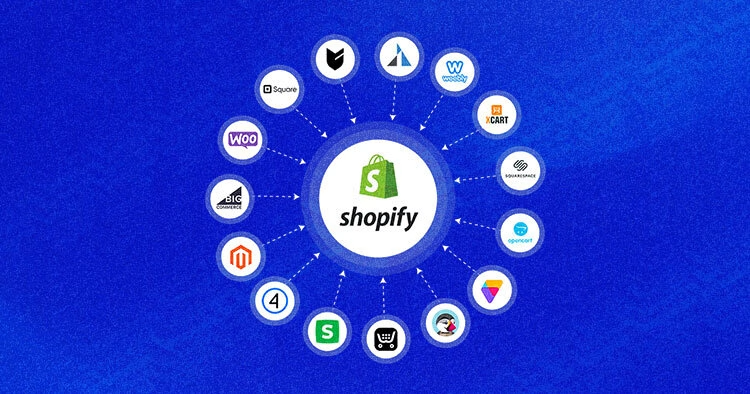
Shopify has long been a leader in the e-commerce industry, but it’s not always the perfect fit for every business. Factors like pricing, customization needs, scalability, and technical control often drive businesses to explore alternatives. In 2025, several e-commerce platforms stand out as strong competitors, each offering unique benefits depending on your goals.
1. BigCommerce
Best for: Growing businesses and enterprise sellers
BigCommerce is built for scale. It comes with advanced features like multi-storefront management, headless commerce, robust SEO, and no transaction fees. It’s ideal for brands that want global expansion and complex catalogs. While it may feel more technical than Shopify, its out-of-the-box features make it one of the strongest alternatives.
2. WooCommerce
Best for: WordPress users who want flexibility
WooCommerce is an open-source plugin that turns WordPress into a powerful online store. It’s highly customizable, SEO-friendly, and supports unlimited products. The platform is free at its core, but hosting and premium extensions add to the cost. It requires some technical knowledge, making it great for businesses that want full control over their store.
3. Wix
Best for: Beginners and small businesses
Wix offers a drag-and-drop website builder with e-commerce features. It’s user-friendly, affordable, and perfect for small businesses or creatives who want to launch quickly without coding. However, it doesn’t scale as efficiently as Shopify or BigCommerce, making it better suited for smaller operations.
4. Squarespace
Best for: Creative brands and service-oriented businesses
Squarespace is known for its elegant templates and strong design capabilities. It combines website building, blogging, and e-commerce in one platform. It’s perfect for businesses that prioritize branding and visuals, though it lacks the extensive integrations and flexibility found in more advanced platforms.
5. Ecwid
Best for: Adding e-commerce to existing websites
Ecwid is ideal for businesses that already have a website and simply want to add a store. It’s lightweight, easy to set up, and supports multi-channel selling across social media and marketplaces. However, it’s not as feature-rich as full-scale e-commerce platforms.
6. Adobe Commerce (Magento)
Best for: Large enterprises with complex needs
Adobe Commerce, formerly Magento, is a powerful platform built for enterprise-level businesses. It offers complete customization, advanced workflows, and the ability to handle massive product catalogs. While it delivers unmatched flexibility, it also requires significant technical expertise and budget.
7. PrestaShop
Best for: Businesses seeking open-source freedom
PrestaShop is an open-source solution that gives businesses complete control over customization. It supports multiple languages, currencies, and a wide variety of modules. While it’s free to use, technical setup and maintenance can be challenging, making it better suited for those with development resources.
8. Spree Commerce
Best for: Headless commerce and multi-vendor marketplaces
Spree Commerce is an open-source, API-driven platform that excels in headless setups. It’s highly customizable, supports multi-vendor marketplaces, and scales easily. However, it requires developers to manage, making it less suitable for beginners.
Quick Comparison
| Platform | Best For | Strengths | Considerations |
|---|---|---|---|
| BigCommerce | Scaling and enterprise brands | Built-in features, no transaction fees | Steeper learning curve |
| WooCommerce | WordPress flexibility | Full control, open-source, SEO friendly | Requires hosting & tech knowledge |
| Wix | Beginners & small stores | Easy setup, affordable, design-focused | Limited scalability |
| Squarespace | Creative businesses | Beautiful templates, strong branding tools | Fewer integrations |
| Ecwid | Existing websites needing e-com | Easy to embed, quick setup | Not as advanced as full platforms |
| Adobe Commerce | Large enterprises | Enterprise-level customization | High cost and complexity |
| PrestaShop | Open-source businesses | Multilingual, flexible, SEO friendly | Technical setup required |
| Spree Commerce | Headless & multi-vendor stores | API-first, scalable, customizable | Developer-focused |
Final Thoughts
Shopify is a powerful e-commerce platform, but it’s not the only option in 2025. If you value scalability and built-in features, BigCommerce is a strong contender. For full control and flexibility, WooCommerce or PrestaShop may be better choices. If you want simplicity and design, Wix or Squarespace will get you up and running quickly. Meanwhile, Adobe Commerce and Spree Commerce are ideal for large, complex businesses that require enterprise-grade solutions.
The right choice depends on your budget, technical expertise, and long-term growth strategy.